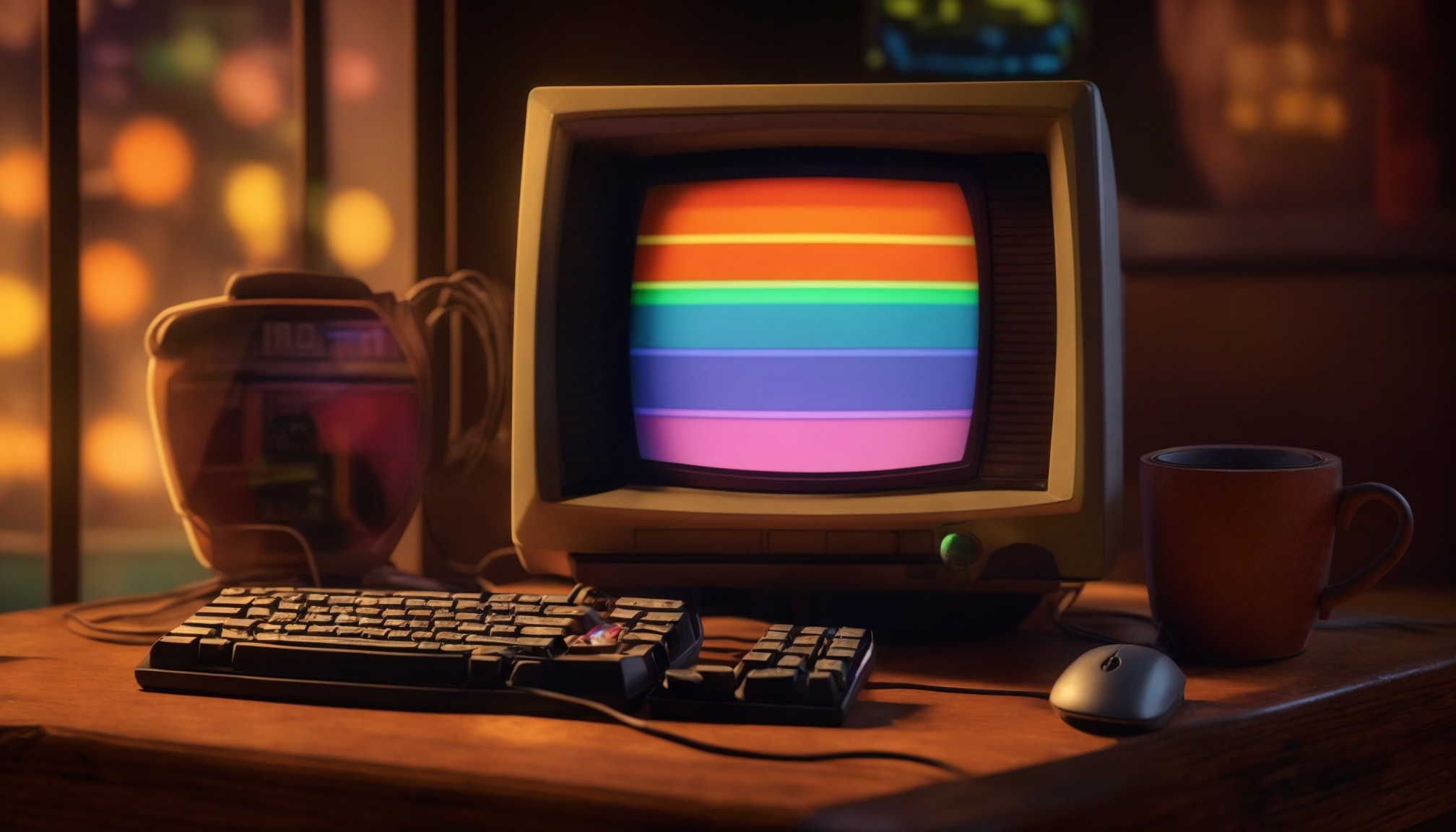
Browser gaming history lives on through modern emulation tools that bring beloved retro web games back to life for a new generation of players.
Cherry Games – When Adobe officially killed Flash Player on December 31, 2020, an estimated 2.5 million Flash games vanished from the open web overnight, taking with them a decade’s worth of browser gaming culture that shaped an entire generation of casual players. But the story does not end there.
It would be easy to dismiss Flash nostalgia as simple sentimentality, but the numbers tell a different story. The Internet Archive’s Flash game preservation project has catalogued over 36,000 playable Flash titles as of 2024, and their Flash emulation portal logs millions of monthly visits, proving that demand for these games is anything but a niche curiosity. These were not throwaway experiences either. Titles like Fancy Pants Adventures, Bloons Tower Defense, and N introduced millions of players to core game design concepts: tight controls, rewarding progression loops, and creative level design achieved with minimal resources.
Berlawanan dengan kepercayaan umum, Flash games were not just time-killers. Many indie developers who now lead successful studios on Steam cite Newgrounds and Kongregate as their first classrooms. The era produced a design philosophy of doing more with less that still resonates in the modern indie scene. Losing access to these games is not just a nostalgia problem; it is a cultural preservation problem.
After testing more than a dozen methods over three weeks, including emulators, standalone players, and archive platforms, a clear picture emerged of what actually works in 2024. The landscape has matured significantly since 2021, and most solutions now require zero technical expertise.
Ruffle is the gold standard. It is an open-source Flash emulator written in Rust that runs directly in modern browsers without any plugins. Compatibility has reached approximately 85% of ActionScript 2 titles as of mid-2024, according to the project’s own GitHub release notes. Simply visit a site that has integrated Ruffle (the Internet Archive does this automatically) and most games load within seconds. The remaining 15% are typically complex ActionScript 3 games, where compatibility is still catching up.
Flashpoint by BlueMaxima is the most comprehensive offline solution. The full archive version weighs in at over 900 GB and contains more than 100,000 web games and animations. A more manageable “Infinity” version lets you download individual games on demand. For anyone serious about deep-diving into Flash history, this is the definitive library.
Read More: Internet Archive Flash Software Library: Thousands of Playable Classic Browser Games
Most articles on this topic stop at recommending the Internet Archive and Ruffle, and that is where they do a disservice to readers who want a complete experience. Here is the insight that rarely surfaces: not all Flash games were hosted on major portals. A significant portion of Flash culture lived on personal websites, school-hosted servers, and long-defunct hobby portals. The Wayback Machine’s Flash integration does not reach these reliably, and Flashpoint’s curation, while impressive, prioritizes mainstream titles.
A more targeted approach involves using the Wayback Machine’s CDX API to search for cached SWF files by domain or keyword. This is a technique used by active digital archaeologists in communities like the Flash Preservation Discord, where members systematically recover and verify obscure titles. If you are hunting for a specific game you remember from a school computer lab, this community is your best resource, not a generic Google search.
There is also a widespread misconception that Ruffle handles all games identically. In practice, games built with heavy use of ActionScript 3 or third-party libraries like TweenMax behave inconsistently. Before assuming a game is broken, check Ruffle’s compatibility tracker on GitHub. In many cases, a specific build from two weeks earlier runs the game perfectly, and rolling back is a two-minute fix.
Imagine you remember spending lunch breaks in 2007 playing a tower defense game on a site you cannot name, with a specific mechanic where towers could be upgraded into two distinct branches. You have a fuzzy memory and no title. This is an extremely common situation, and there is a concrete path forward.
Start with the Flash Game Archive subreddit (r/flashgaming) and describe your memory in detail: the art style, color palette, approximate year, any sounds you recall. The community has an almost supernatural ability to identify games from fragmentary descriptions, typically responding within hours. Once you have a title, cross-reference it against Flashpoint’s searchable database. If it is not there, post the title in the Flashpoint Discord’s request channel. Volunteer curators regularly add requested titles within days. This workflow has a success rate that feels remarkable given how much Flash content was presumed lost.
As a concrete action: if you are starting fresh today, download Flashpoint Infinity (the lightweight launcher, around 500 MB), search for the top 50 titles on Newgrounds’ all-time most-played list, and download them locally. This gives you an offline, browser-independent collection that will work regardless of what happens to internet infrastructure. The complete guide to reliving classic Flash games recommends this as your baseline before exploring anything else.
Ruffle reached a major milestone in 2023 when it began partial ActionScript 3 support, and the project’s roadmap targets full AS3 compatibility by late 2025. This means the remaining 15% of unplayable games has a realistic timeline for resolution. Simultaneously, projects like Newgrounds’ own player app have created a sustainable hosting model where creators receive ad revenue even from decade-old titles, giving the preservation effort an economic rationale beyond pure altruism.
The broader lesson here is that digital preservation requires active community effort, not passive assumption. The generation that grew up on Flash games is now in their late 20s to early 40s, many of them developers, archivists, and engineers with the technical skills to contribute. Organizations like the Software Preservation Network have begun formally documenting browser game history alongside console and PC gaming, signaling that Flash culture is finally being taken seriously as a legitimate part of gaming heritage.
The tools exist, the communities are active, and the games are more accessible today than they were two years after Flash’s death. Whether you are hunting a specific childhood memory or simply curious what browser gaming looked like before mobile dominated the casual market, the infrastructure to explore that history is waiting. The real question is: which game are you going to load first?
Cherry Games - The online casino landscape has witnessed a surge of retro-themed releases, with titles that echo the neon…
Cherry Games - Over 30,000 browser-based titles vanished when Adobe terminated Flash support in December 2020, yet the collective hunger…
Cherry Games - Over 90,000 Flash games were rescued from digital extinction after Adobe pulled the plug on Flash Player…
Cherry Games - The abrupt shutdown of Adobe Flash Player in 2020 effectively wiped out decades of internet history, leaving…
Cherry Games - Despite the official death of Adobe Flash Player in 2020, the demand for classic flash games online…
Cherry Games - When Adobe officially ended support for Flash Player on December 31, 2020, an entire generation of digital…