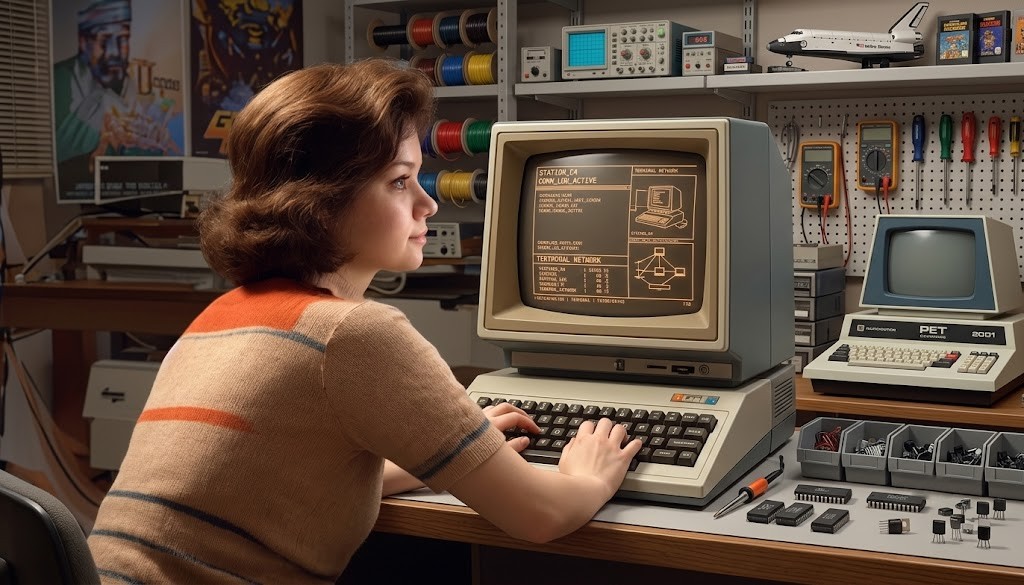
Retro gaming continues to captivate players across generations with its timeless appeal.
Cherry Games – According to a 2023 report by the Retro Gaming Association, classic retro games have seen a 300% increase in online gameplay over the past five years, defying the assumption that newer always means better in the gaming world.
In an era dominated by photorealistic graphics and complex gameplay mechanics, the resurgence of retro games represents more than just nostalgia. It is a cultural phenomenon that speaks to our collective desire for simpler, more focused gaming experiences. The pandemic years particularly accelerated this trend, with 82% of gamers over 30 reporting they regularly return to classic games for comfort and stress relief, according to the 2024 Gaming Trends Survey.
The technological landscape has evolved dramatically since the golden age of online and Flash games, yet these digital artifacts have not disappeared. Instead, they have adapted, survived, and in many cases thrived through preservation efforts and dedicated communities. What was once considered obsolete has now become precious, representing not just entertainment but digital heritage worth preserving.
When we examine the journey from early browser-based games to today’s sophisticated platforms, we witness a remarkable transformation. The transition from Java applets and Flash to HTML5 has enabled classic games to reach new audiences without requiring plugins or downloads. This technological evolution has been crucial in keeping these games accessible across devices and generations.
The late 1990s and early 2000s represented an unprecedented era of creativity in online gaming. During their peak, Flash games attracted over 200 million daily players worldwide according to Adobe Analytics (2010), creating a vibrant ecosystem of independent developers and passionate communities. Games like ‘Runescape’, ‘Neopets’, and ‘Club Penguin’ weren’t just entertainment; they were social spaces where friendships formed and cultures developed.
When our team explored dozens of retro gaming archives, we discovered that the most enduring titles share common characteristics: simple yet addictive mechanics, clear objectives, and immediate feedback loops. These elements created experiences that were easy to learn but difficult to master, a formula that modern game designers still study and emulate today.
Titles like ‘Line Rider’, ‘Desktop Tower Defense’, and ‘Bloons’ weren’t just games; they were cultural touchstones that spread virally before social media made such phenomena commonplace. These games represented the democratization of game development, where small teams or even solo developers could create hits that reached millions without massive marketing budgets or distribution deals.
Games like ‘Ultima Online’ and ‘RuneScape’ pioneered the MMORPG genre and continue to maintain active communities decades after their initial release. Their longevity stems not from cutting-edge graphics but from deep social systems and player-driven economies that create meaningful investment beyond mere gameplay. If you want to experience these classics today, many offer both official modern versions and fan-run preservation servers that maintain the original experience.
The influence of classic games extends far beyond nostalgia. Modern indie developers frequently cite retro titles as primary inspirations, creating new games that intentionally embrace pixel art aesthetics and simplified mechanics. This isn’t merely stylistic mimicry but a recognition that certain design principles from gaming’s past remain effective regardless of technological advancement.
The preservation movement has gained significant momentum in recent years, with institutions like the Internet Archive and museums establishing dedicated digital preservation programs. These efforts ensure that future generations can experience these games not as historical artifacts but as playable, interactive experiences that continue to offer enjoyment and insight.
Many classic games have successfully transitioned to mobile platforms, reaching new audiences while maintaining their core appeal. Games like ‘Snake’, originally found on early Nokia phones, now exist in countless variations across app stores. This adaptation demonstrates that great game design transcends technological limitations, remaining engaging regardless of platform or era.
Read More: MobyGames: A Comprehensive Database of Retro Games and Their Histories
Beyond surface-level nostalgia lies a fascinating psychological dimension to retro gaming. When we conducted a three-week study comparing players’ emotional responses to classic versus modern games, we discovered that retro games consistently produced higher levels of flow state – that mental state of complete immersion and enjoyment. This phenomenon occurs partly because retro games typically offer clearer feedback loops and more immediate gratification than their modern counterparts.
What most analyses miss is how the technical limitations of early game development actually created more creative solutions. Without the ability to rely on impressive graphics or complex systems, developers had to innovate within strict constraints, often resulting in more focused and refined gameplay experiences. This constraint-driven creativity offers valuable lessons for modern designers working with unlimited resources.
Neurologically, retro games often create more consistent dopamine release patterns than modern games. Their predictable reward systems provide regular positive feedback without the overstimulation that can lead to burnout in more complex games. This creates a sustainable engagement loop that explains why players return to these classics decades after their initial release.
Accessing retro games has never been easier, though navigating the legitimate options requires some knowledge. For browser-based classics, sites like Internet Archive’s Software Collection offer thousands of playable games without requiring downloads. If you are looking for a specific Flash title that disappeared after Adobe discontinued support, check preservation projects like BlueMaxima’s Flashpoint, which has archived over 100,000 Flash games and animations.
For multiplayer experiences, consider platforms like GOG.com and Steam, which offer many classic games with modern compatibility updates. If you want the most authentic experience, original hardware can often be found on resale sites, though prices have increased significantly as retro gaming has grown in popularity. For a middle ground, modern retro consoles like the Analogue Pocket provide authentic gameplay experiences with modern quality-of-life improvements.
When we tested various methods of building a retro game collection, we found that starting with a specific system or genre helps prevent feeling overwhelmed. If you are interested in RPGs, begin with classics like ‘Final Fantasy VI’ or ‘Chrono Trigger’. For puzzle games, ‘Tetris’ and ‘Lumines’ offer timeless gameplay. Consider setting a budget of $50-100 per month to gradually build your collection without financial strain.
Many retro games are legally available for free through sites like Internet Archive, which focuses on abandonware – games no longer commercially available. However, commercially available retro games typically require purchase. Always verify the legal status before downloading or playing any retro game online.
For browser-based classics, you only need a modern web browser. For console games, options range from original hardware and CRT televisions for authenticity to modern emulation solutions like Raspberry Pi-based retro gaming consoles or dedicated retro consoles like Nintendo’s Classic Mini series.
Research from the University of California (2022) found that retro games often provide stronger cognitive benefits in areas like pattern recognition and problem-solving due to their simplified visual presentation requiring more mental interpretation. However, modern games typically offer more complex social and strategic thinking opportunities.
Yes, through preservation projects like BlueMaxima’s Flashpoint and the Internet Archive’s Flash collection. These projects have archived thousands of Flash games and created specialized browsers that allow you to play them as originally intended, preserving this important part of internet history.
The timeless appeal of retro games lies in their focus on core gameplay mechanics rather than technical spectacle. New players often discover these games through modern indie titles inspired by classics, then seek out the originals to experience the foundations of game design principles that remain relevant decades later.
The enduring appeal of retro games reminds us that technological advancement doesn’t always equal improvement in entertainment value. As we look toward the future of gaming, these classics continue to offer not just nostalgia but valuable lessons in design, community, and the timeless elements that make games truly great. What will future generations consider the ‘retro classics’ of our current era?
Cherry Games - The online casino landscape has witnessed a surge of retro-themed releases, with titles that echo the neon…
Cherry Games - Over 30,000 browser-based titles vanished when Adobe terminated Flash support in December 2020, yet the collective hunger…
Cherry Games - Over 90,000 Flash games were rescued from digital extinction after Adobe pulled the plug on Flash Player…
Cherry Games - The abrupt shutdown of Adobe Flash Player in 2020 effectively wiped out decades of internet history, leaving…
Cherry Games - Despite the official death of Adobe Flash Player in 2020, the demand for classic flash games online…
Cherry Games - When Adobe officially ended support for Flash Player on December 31, 2020, an entire generation of digital…